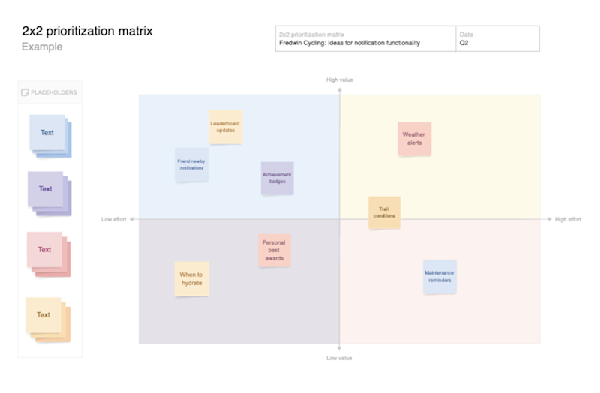
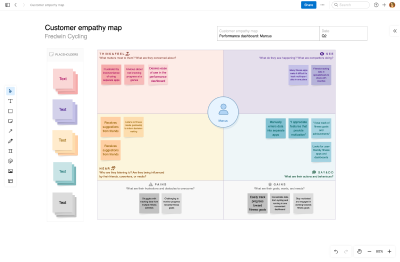
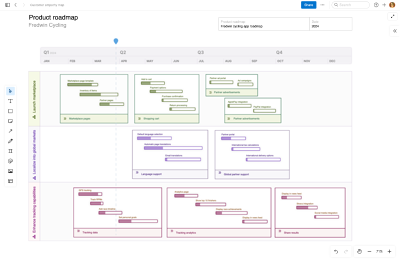
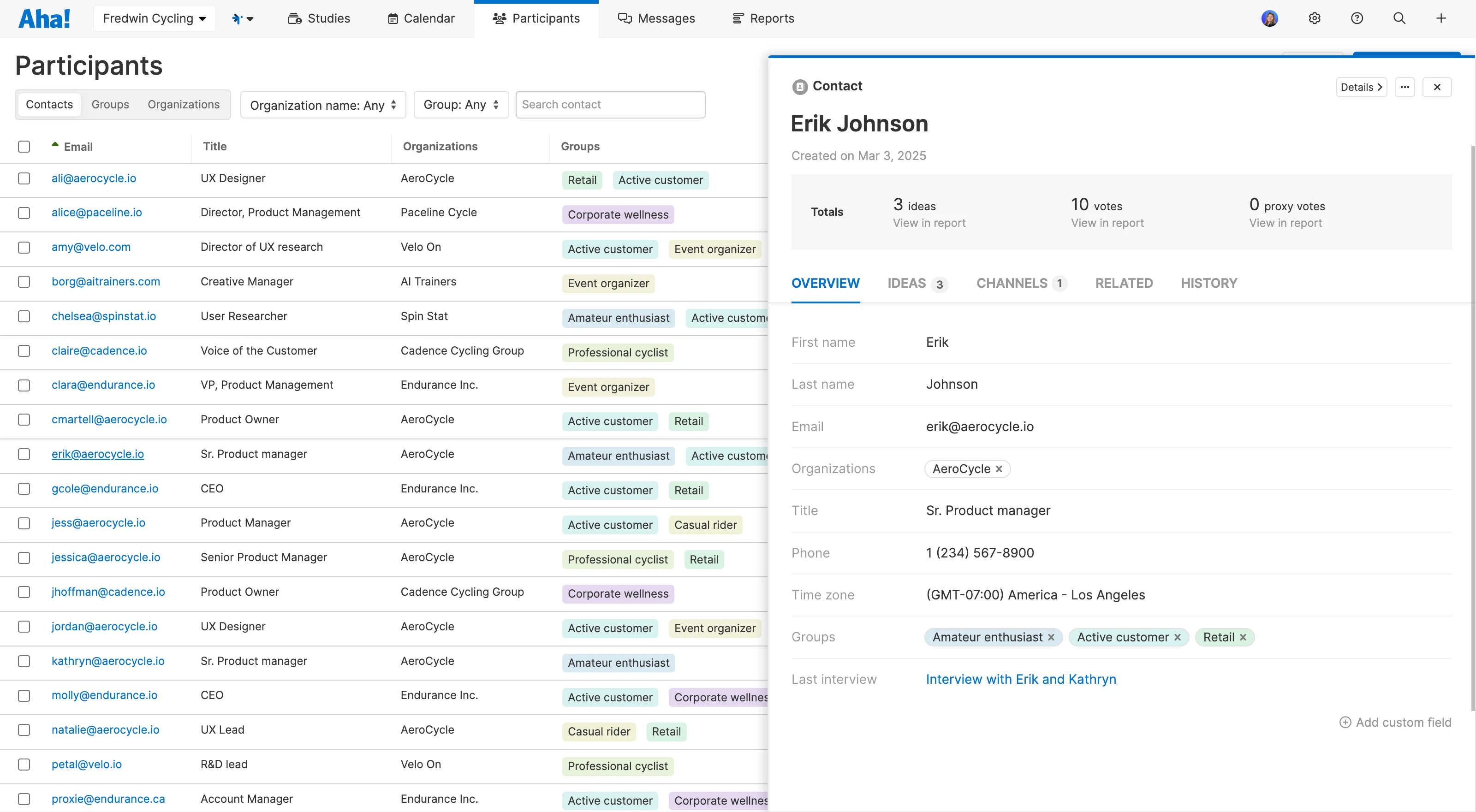
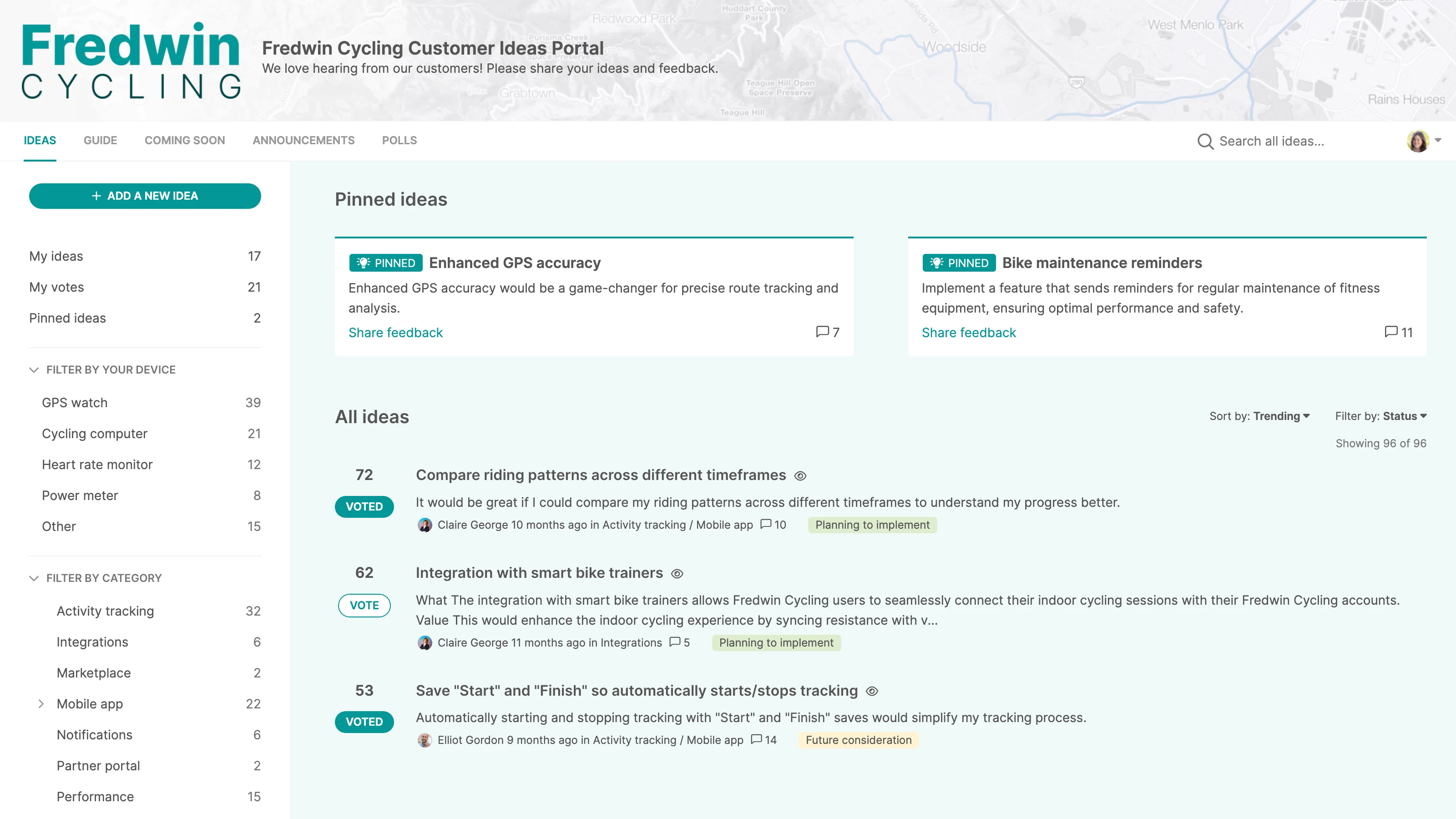
Customer ideas and votes can be captured in an Aha! Ideas portal.
Structured discovery work
These methods are deliberate. You define a learning goal, choose your audience, and design the format.
Customer interviews
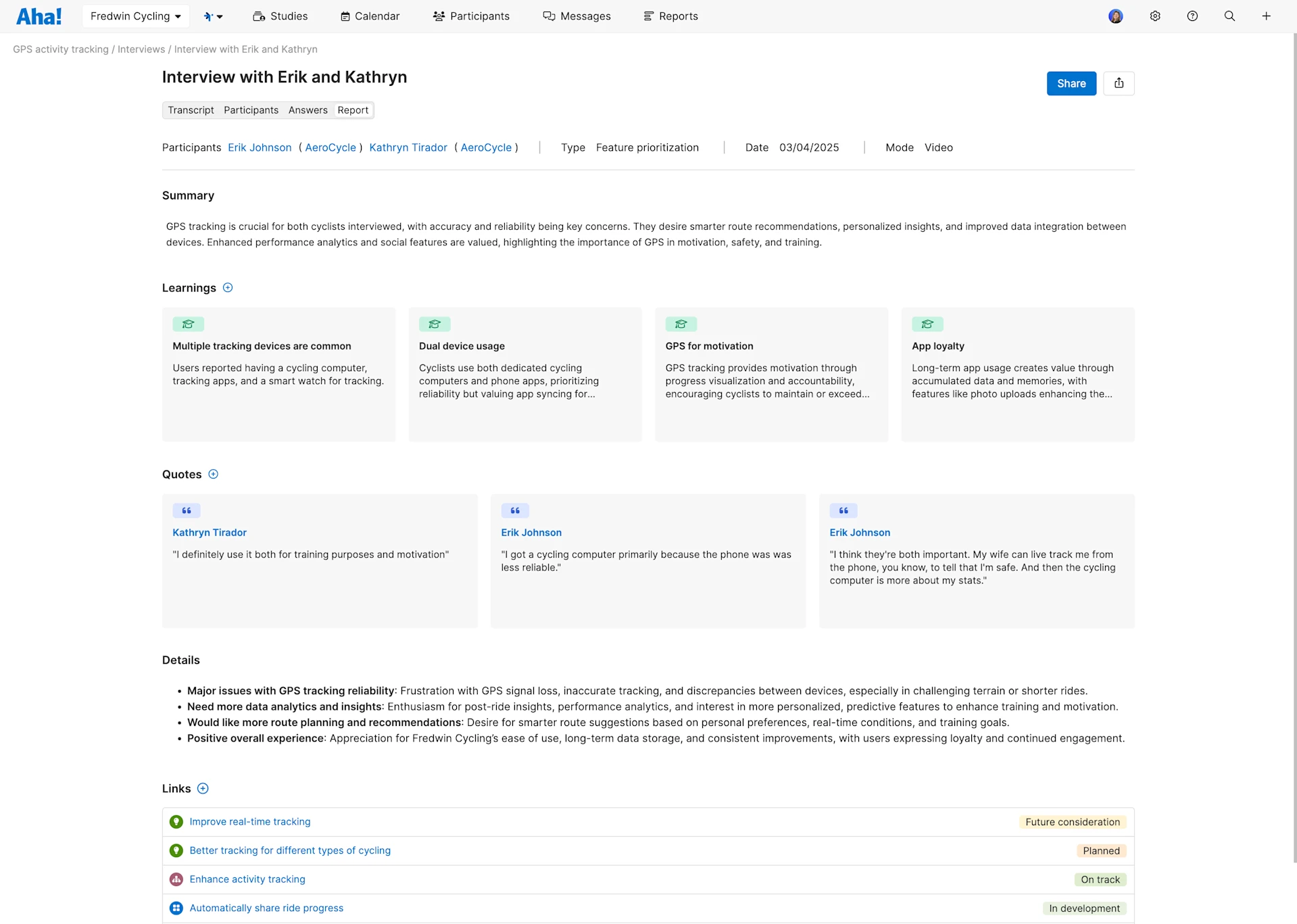
| Explore how people think and feel — not just what they do. Ask open-ended questions to surface unmet needs and clarify context. With Aha! Discovery, you can schedule interviews, capture notes, tag key takeaways, and use AI to summarize insights. You can then group related insights into themes and link them directly to your product roadmap. Use it when: You want rich context behind user behavior or need to explore a complex problem in depth |
Surveys | Reach a large group quickly with a mix of quantitative and qualitative questions. Use it when: You want to validate a hypothesis or gauge sentiment across a broader audience |
Usability testing | Watch how customers interact with your product in real time. These sessions help you catch friction points and task failures that users might not report themselves. Use it when: You need to assess whether a workflow or feature is intuitive and effective |
Focus groups | Small group discussions provide insight into user attitudes and early reactions to new ideas. Use it when: You want to explore early reactions to an idea or compare perspectives across a customer segment |
Customer advisory boards | Regular meetings with strategic customers offer high-level feedback on product direction. Use it when: You want to pressure-test roadmap plans or get input on your long-term strategy from key decision makers |
Quantitative signals and behavioral data
These methods help you understand what users are doing and how they respond to changes. This data often guides where to look deeper with research.
Polls | Lightweight sentiment checks. Polls are typically one-question surveys with pre-defined responses. Use it when: You need a quick pulse on preferences or want to validate a specific idea with minimal friction |
A/B testing | Compare variations of a product element — like a headline or call to action — to see which one performs better. Use it when: You want to optimize content, design, or functionality based on real user behavior |
Analytics | Behavioral data shows how users navigate your product: where they click, what they ignore, and where they drop off. Use it when: You need to identify tricky points or usage gaps that warrant deeper investigation through qualitative methods |
Top
How to turn customer feedback into product direction
Collecting feedback is just the beginning. The real value comes from what you do with it. You must organize what you hear, find the deeper meaning, and decide what is worth acting on — all while staying aligned with your product goals.
In Aha! Discovery, you can group interview notes by topic, product area, or customer need. In Aha! Ideas, you can track patterns across suggestions. Together, these tools help clarify what people are really asking for (even when they do not state it directly!).
But how do you know when a pattern reveals a real opportunity versus a distraction?
This is where strategy sharpens your judgment. Focus on requests that move your goals forward, and weigh trade-offs carefully. In Aha! Ideas, you can score ideas based on votes, potential revenue, and alignment with strategic priorities. And in Aha! Discovery, you can analyze individual interviews and surface recurring themes across bodies of research.
Elle (the AI assistant in Aha! software) is available in both tools to make these parts of your workflow faster. It can help you focus your product planning by cleaning up your ideas data, ranking individual ideas based on their potential impact, and codifying themes from all the feedback you have collected.
You get the clearest view of where opportunities exist to improve your product when you use these tools together. From there, you can decide where to investigate further and lead with your own judgment.
For example, suppose a high-volume idea gains traction in your ideas portal. You pause to validate. You check support tickets and run interviews. What customers actually need turns out to be related, but different. You tag the theme, connect it to the original idea, and promote a refined solution that better fits your goals.