What is the product lifecycle?
Learn about the six discrete lifecycle changes most products face over time
Last updated: September 2024
The product lifecycle refers to how products change and perform over their lifespans — including six distinct phases: product development, introduction, growth, maturity, saturation, and decline. We will cover the history of the product lifecycle as a concept along with its stages and some real-world examples. Besides this, we will explore some product lifecycle best practices and relevant templates you can use today.
Launches get all the attention. But there is so much that happens before and after you release something new. A product evolves based on market conditions, customer preferences, and technological advancements — growing and changing until, in most cases, it eventually declines. This journey sometimes takes only a few years. But for highly successful products, it can take decades or more.
As a product builder, this means you might see your product through its entire lifecycle or only a small part of it. That is why it is important to understand the characteristics of this journey. You can best position yourself to manage your product successfully, no matter where it is in its evolution.
Launch and manage your product with Aha! software — free for 30 days.
What is the product lifecycle? And what is product lifecycle management?
This journey we are talking about is called the product lifecycle (sometimes abbreviated as PLC). The product lifecycle refers to how most products evolve and perform over time. It has six stages: product development, introduction, growth, maturity, saturation, and decline. We will share more on that later.
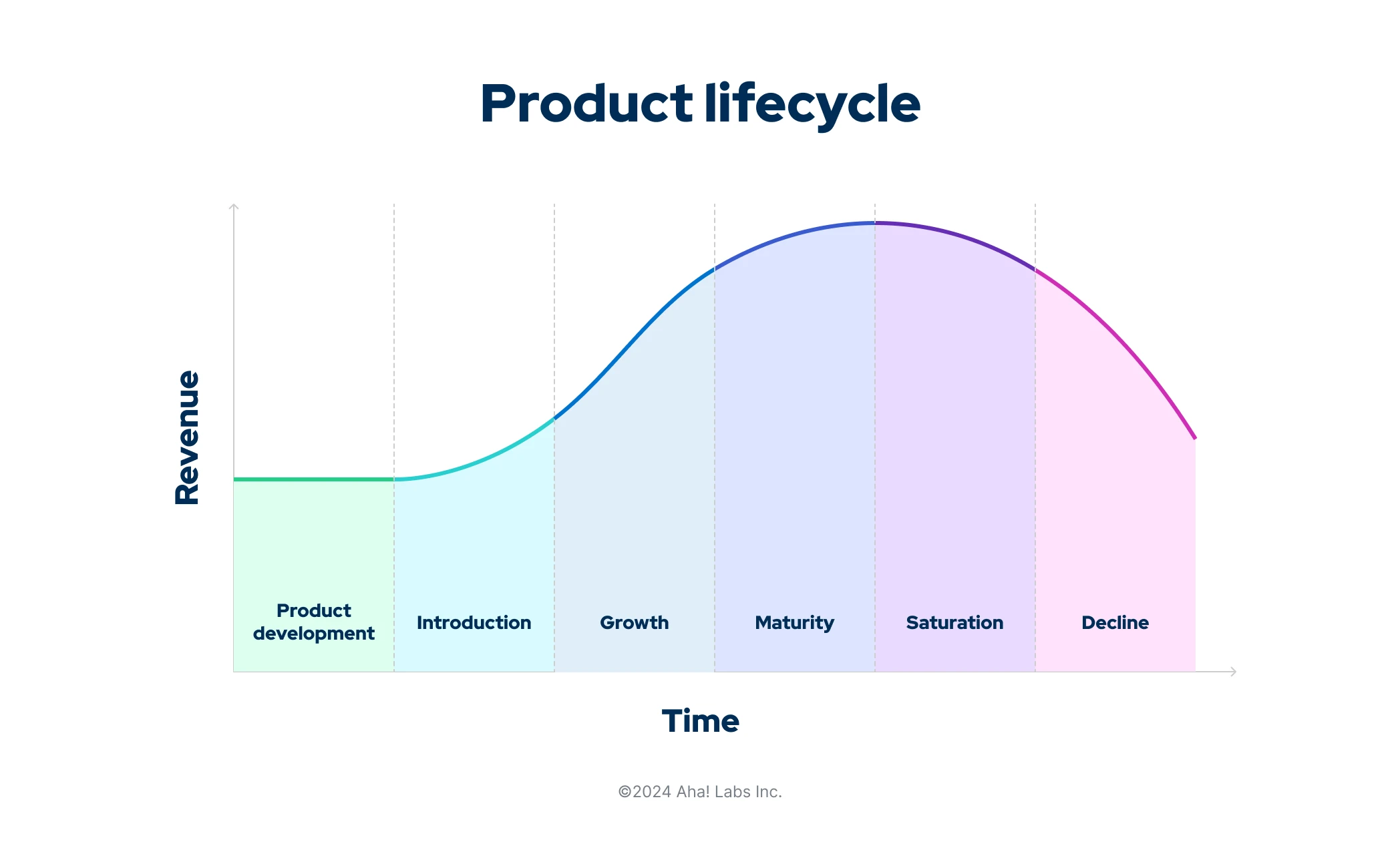
Although the product lifecycle is usually referenced in universal terms, the details are always situational. A PLC at a multinational corporation with a large portfolio of products and many resources will look very different from a scrappy startup with a small team. (Unless, of course, that startup enjoys wild success and becomes a multinational corporation.)
The PLC is especially important in software, where new products can be built quickly and innovation occurs at breakneck speed. And understanding PLC concepts as a whole is a useful way to identify overarching patterns and evaluate how your product strategies could shift over time.
But the actual process of overseeing your product's journey involves specific activities and decisions at each stage. This practice is called product lifecycle management (PLM). The goal of PLM is to make product development processes more robust and efficient, helping you get to market faster while extending your product's longevity. That way, you can create value for customers and the business for as long as possible.
This guide explores each stage of the product lifecycle and PLM practices in depth — so you can better understand your own product and use that knowledge to make informed decisions. Use the following links to jump ahead to a specific section:
A brief history of the product lifecycle and product lifecycle management
What are some best practices for product lifecycle management?
A brief history of the product lifecycle and product lifecycle management
The concept of a product lifecycle gained critical attention in 1965 when economist Theodore Levitt published an influential article titled Exploit the Product Life Cycle in Harvard Business Review. Levitt pointed out that although most business leaders were aware of the product lifecycle, few were incorporating it into their product strategy or decision-making. Levitt noted that decisions made today should consider the next stage ahead.
This idea of factoring the PLC into product decisions took hold in the 1980s. American Motors Corporation (AMC) accomplished the first highly successful example. Facing competitors with larger budgets, AMC needed a way to innovate more quickly and efficiently. So, the company looked for ways to improve its product development process. By incorporating early computer-aided design technology, data management tools, and better communication systems, AMC was able to streamline production at drastically reduced costs and bring new models to market faster than competitors. This type of approach is what we now refer to as product lifecycle management.
Since then, PLM has expanded from manufacturing to all types of products and industries (including software). And it has become even more important as organizations coordinate product development across global teams and supply chains, and as demand for new technology continues to speed up.
Product lifecycle vs. product development lifecycle
It is important to quickly note that the lifecycle of a product is not the same as the lifecycle of the product development process. Product development focuses on taking an offering from concept to launch, then continuously refining it for customers. It is an ongoing effort that feeds directly into the product lifecycle. In fact, product development is considered to be the first stage of the PLC — like a cycle within a cycle. This will become clearer in the next section.
Related:
Product vision template
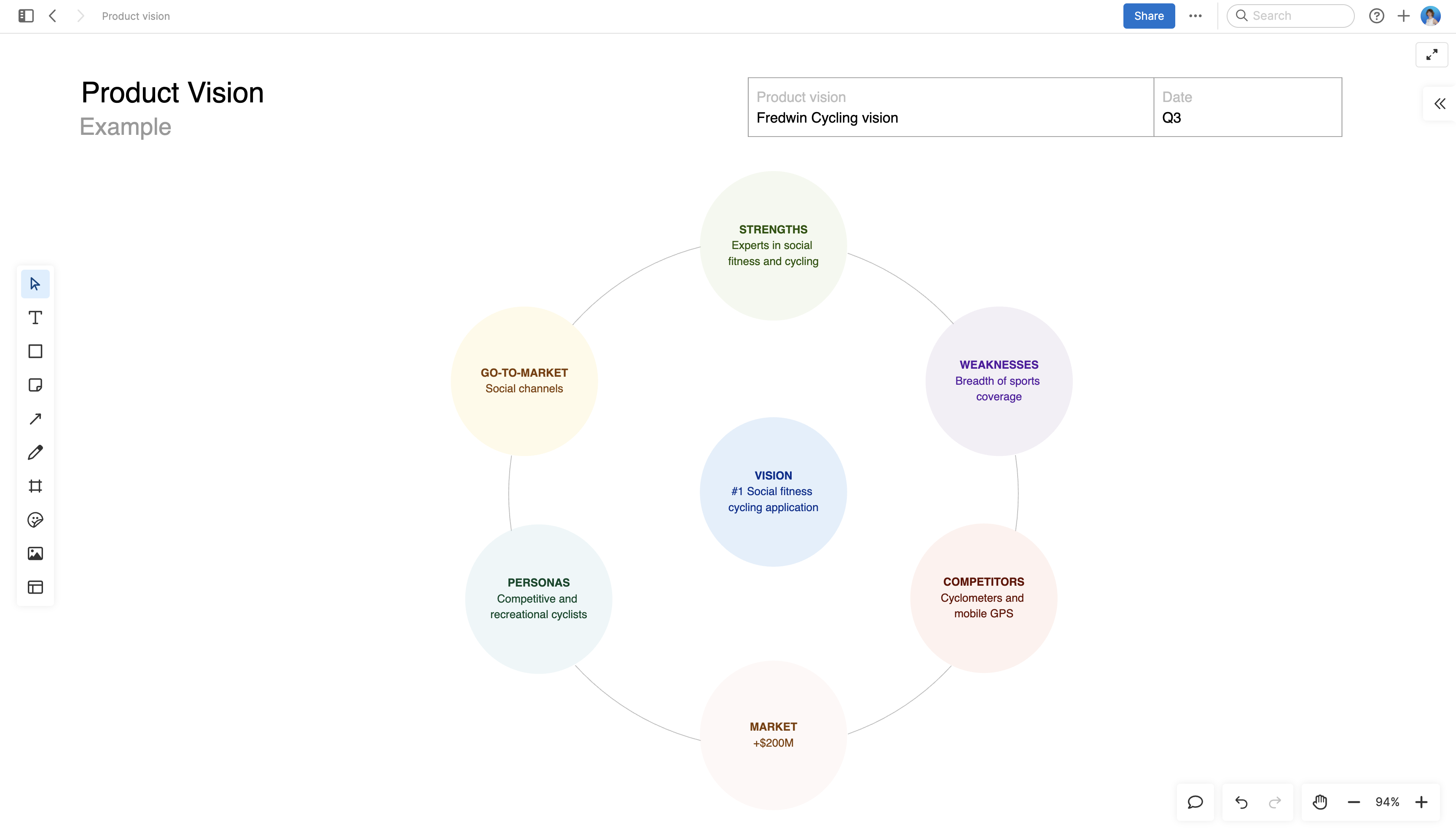
Set your vision for where you want your company or product to be in the future. Define your product's strengths, weaknesses, market size, and more. Read more about the product vision template.