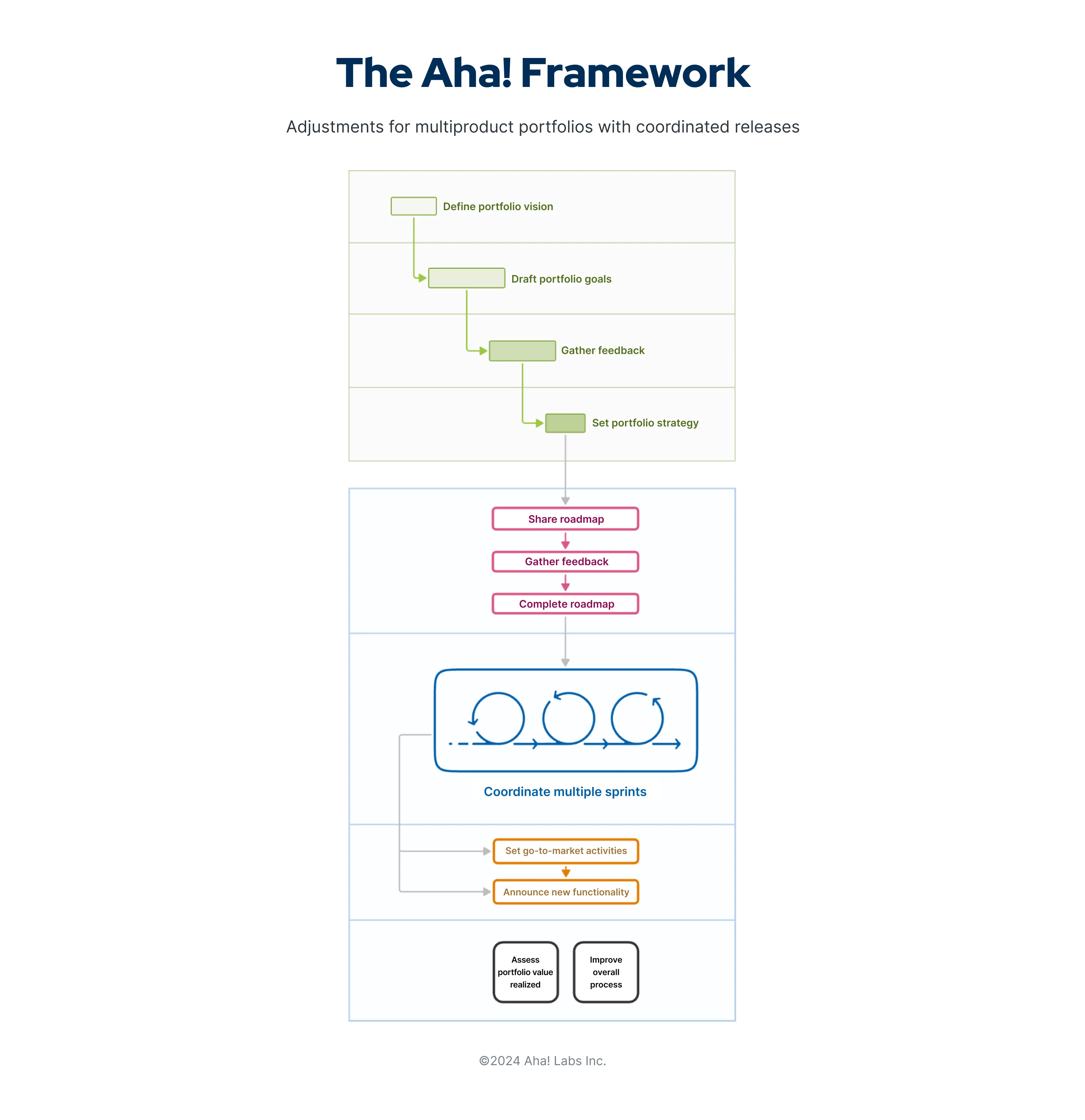
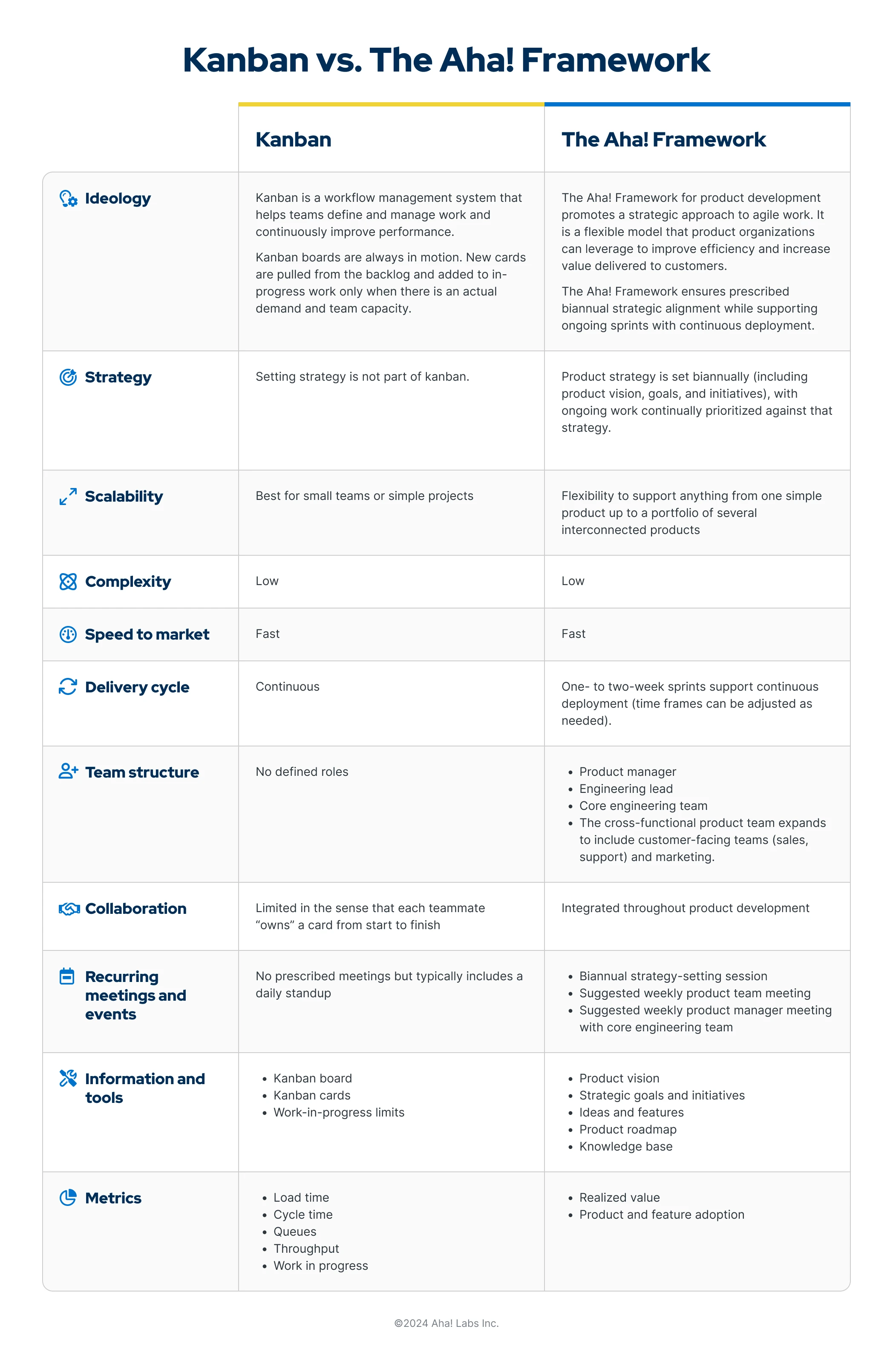
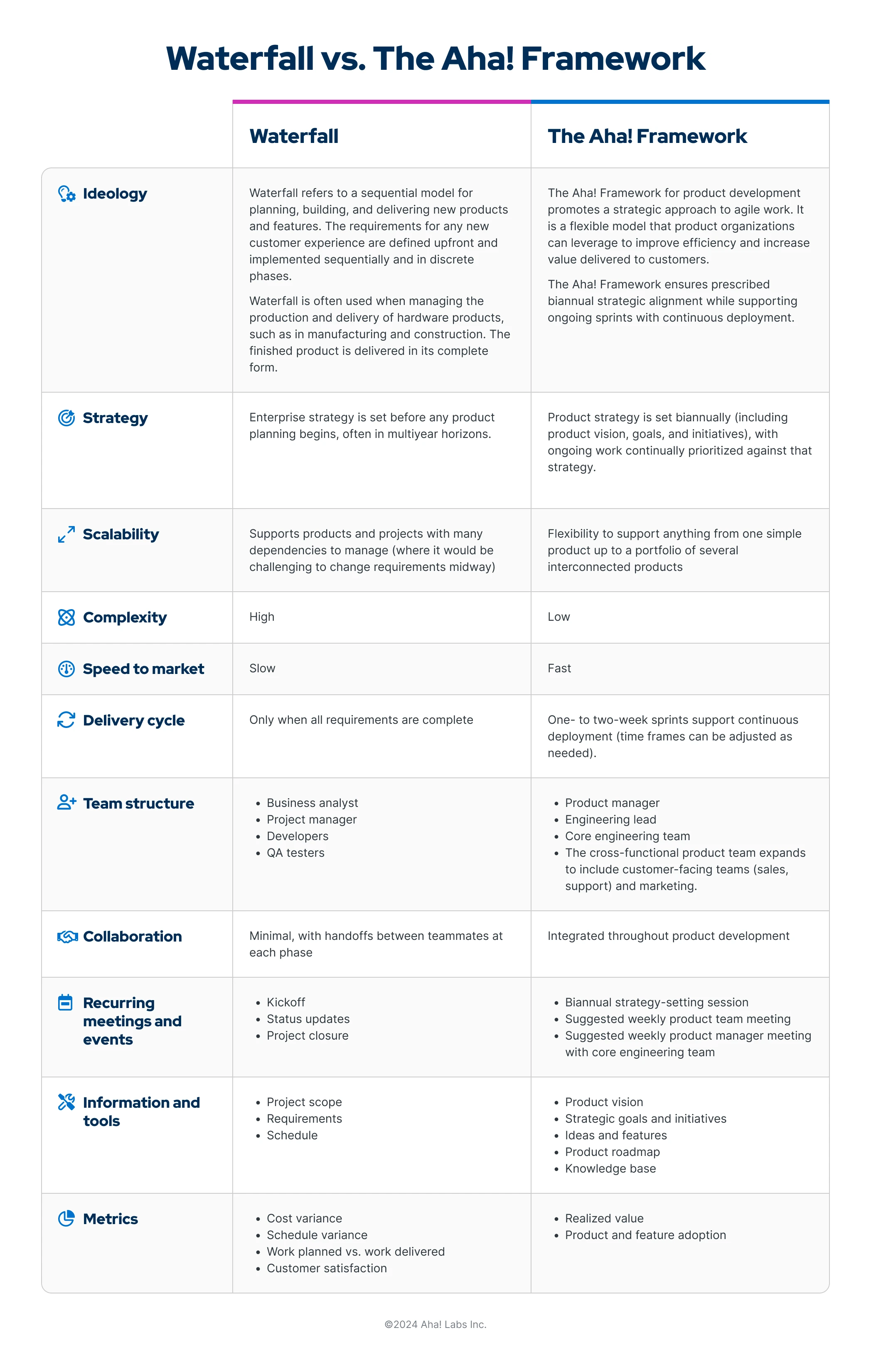
How does The Aha! Framework compare to other product methodologies?
How the flexible product development methodology stacks up to other options
Last updated: September 2025
This guide covers how The Aha! Framework compares to scrum, Scaled Agile Framework®, kanban, and waterfall product development methodologies.
Editor's note: The contents of this guide refer to The Aha! Framework for software built by product teams. We also have a more lightweight approach to product development suited to delivering AI-driven prototypes and applications — read about it here.
Are you wondering whether The Aha! Framework for product development is right for your team? Seeking to better understand how it stacks up against other product development methodologies?
This guide will help you understand the pros, cons, and nuances of popular product development methodologies in direct comparison to The Aha! Framework. The comparisons are presented in order of general popularity of the methodologies and the frequency with which we see product managers following these frameworks in our interactions with Aha! customers.
If you are particularly interested in a specific methodology comparison, jump ahead now to find what you need:
We think The Aha! Framework is ideal for most teams. (Not surprising, right? It is based on our decades of experience building successful products and working with product development teams across the globe.)
There are compelling aspects to every approach covered in this guide. However, they all have fundamental challenges and struggle to contend with needing to be both strategic and agile to build what customers will actually value. Because our framework takes a goal-first approach to continually deploying useful customer experiences, you can likely incorporate elements of our method into your own. Keep that in mind as you read on.
And remember that if you use Aha! software, our Customer Success team is here for you as you roll out any new product development process using the Frameworks functionality in Aha! Roadmaps. If you are not yet an Aha! user, explore the complete software suite — free for 30 days.
Why are product development methodologies important?
Before we get into the detailed comparisons, it is worth taking a moment to consider why methodologies are essential to product development and some of the reasons why they can become burdensome over time.
Every team needs an agreed-upon and repeatable process for product development. Otherwise, you can descend into chaos and stagnation at the start of each new effort — when everyone scrambles to redefine the way they work in real time. Without a way forward together, you get stuck. You want to agree on a framework for success so you can focus your energy on prioritizing the right functionality.
Most folks want to contribute meaningfully and do their best work. The unpredictability of the unknown — product development — is inherently at odds with this instinct to achieve. So we look for ways to bring order and control through added processes.
But time spent managing, expanding, and updating those processes distracts from what really matters: delivering what will bring the most value to your customers and your company. Striving to find what we refer to as the "Minimum Tolerable Process" for building a Minimum Lovable Product is at the backbone of The Aha! Framework.
We included the most essential product development activities based on our experience as product builders and aversion to processes that encourage navel-gazing, acronym soup, and time wasted in copious meetings.
As you read through the direct comparisons below, ponder what a Minimum Tolerable Process would look like for your team.
Related:
What about homegrown methodologies?
Another consideration before we dive in? Homegrown frameworks and product development methods. Many companies formalize their own approaches, picking and choosing from other methodologies to create a unique way of working that best suits their organization, the market in which they operate, and the customers they serve. This makes good sense even if you adapted from a popular method, because every established team evolves to work in ways that are optimized for its organization.
With The Aha! Framework, we brought together the most compelling aspects of agile development with a focus on strategic imperatives and product development best practices.
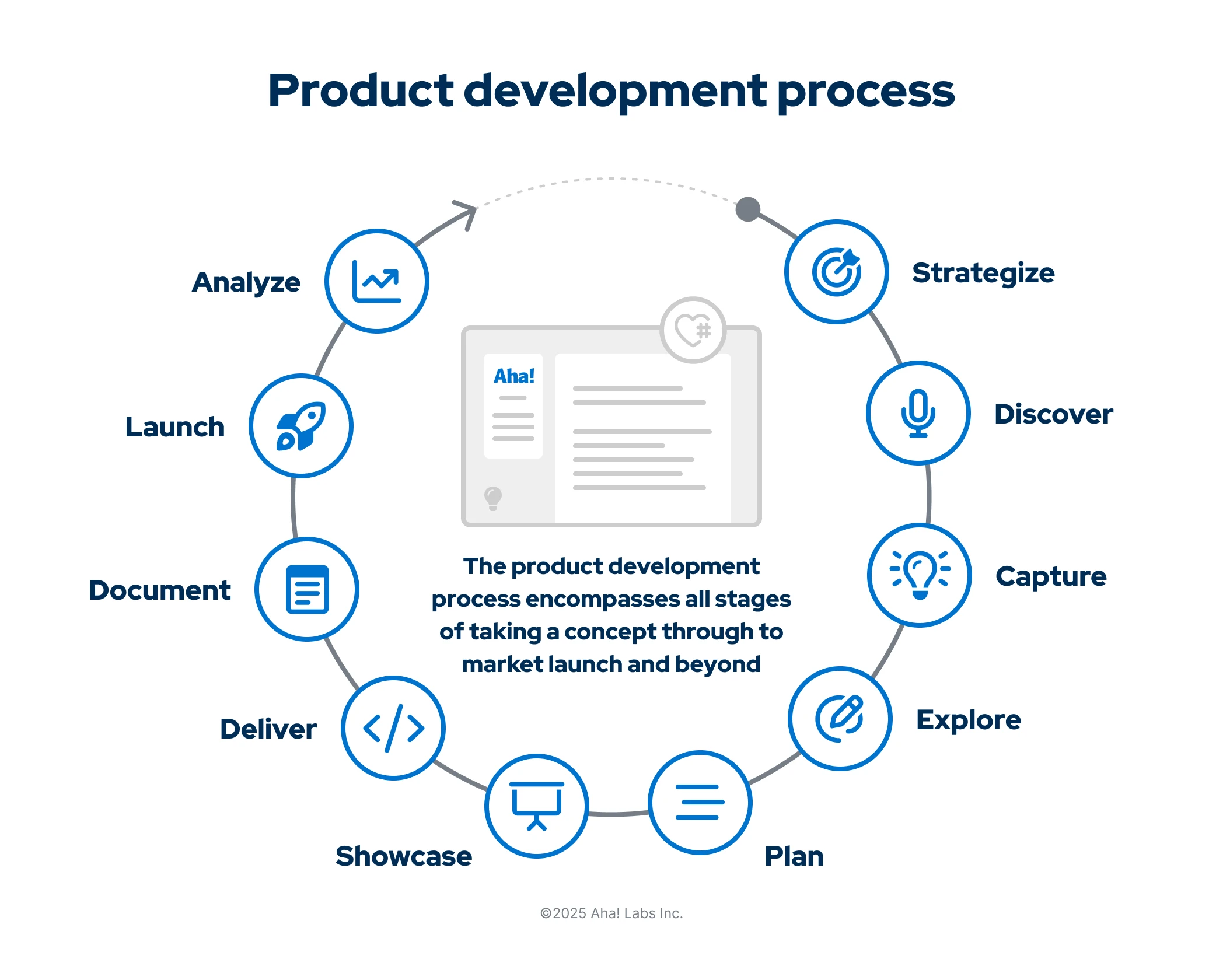
The Aha! Framework accounts for all the essential stages of building lovable products — from creating your product strategy to analyzing your post-launch results.
The Aha! Framework easily layers onto other approaches. If you are comparing our framework to your own, you can borrow from the evaluation points we used in this guide. You might find areas of overlap and places where you want to adopt or adapt our flow to refine your own. If you are using Aha! Roadmaps, we can help you with creating a custom template that brings together the best of both worlds.
Related:
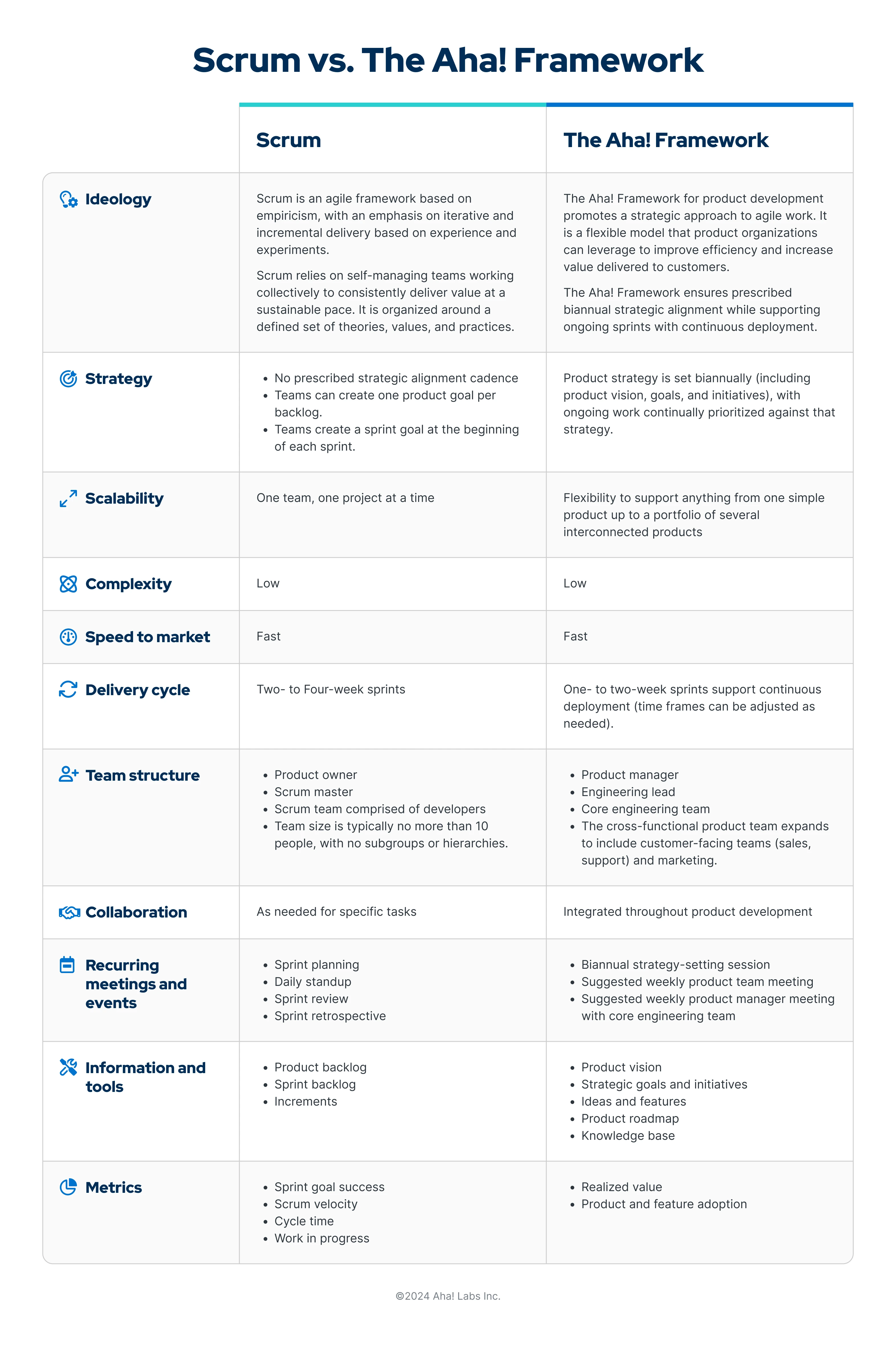
Scrum vs. The Aha! Framework
Scrum is one of the most popular agile frameworks among product development teams today. Although rooted in software development, scrum has been adapted for many other use cases. You can find teams using scrum to manage hardware products, marketing campaigns, and even educational programs in school classrooms.
Scrum is founded on empiricism. This means that the workflow hinges upon the theory that all knowledge is derived from experience. Self-managing teams work collectively to consistently deliver value at a sustainable pace, improving the team's approach over time based on learnings from each completed sprint.
Scrum is organized around a set of theories, values, and practices. There are two defined roles:
Scrum master: The scrum master acts as a coach to the rest of the product team.
Product owner: The product owner is also part of the scrum team, but is accountable to the product. This person is considered a customer contact and is responsible for maximizing product value by defining user stories and refining the product backlog.
The rest of the scrum team has no imposed hierarchy.
There is an emphasis in scrum on empowering developers to work together against concrete deliverables. Teams are encouraged to collaborate and iterate quickly, which can be motivating for high-achieving groups. The focus on completing increments of a project and continuous learning can give folks a tangible sense of accomplishment and investment in the process.
Challenges with scrum stem from a few areas. Scrum purists would argue that trouble starts when organizations do not fully understand or adhere to the method. The scrum master is an especially important role — these folks are responsible for onboarding new teammates, identifying areas to improve, and implementing best practices and learnings.
If an organization does not invest in adequate training or hires inexperienced scrum masters, the entire team suffers. Scrum events can also balloon into multihour meetings if mismanaged, with teams spending too much time talking about the work instead of actually doing it.
Scrum addresses the development phase of product building, so there is not an emphasis on product strategy. Each sprint has a goal, but that goal is specific to what the team is delivering in that sprint — prioritized work should support an overarching strategy, but strategic alignment and roadmap planning are not part of scrum. It does not mention the concept of business strategy. But the scrum guide was updated to include "product goals" in 2020.
In the context of scrum, a product goal represents the commitment the team makes with each product backlog. There should be one product goal for each product backlog. The idea is to provide a "why" behind the work. But beyond this inclusion, there are no concrete details guiding the formation of a product goal (either in terms of structure or timing for creation).
There is also no consideration for product launches or other customer-facing materials, such as documentation. Again, the focus is on development.