Top
Why is product management important in SAFe®?
Product managers are key to SAFe's successful implementation. After all, you are responsible for setting product strategy, understanding what customers want, and defining and prioritizing features. It is up to you to communicate the vision and value of what you are building in order to keep everyone aligned and on track. This positions you as a leader on the product team who can help reinforce SAFe's core values across your organization. These values are not simply best practices. They form the very foundation of SAFe.
When you look holistically at the four core values of SAFe — alignment, transparency, respect for people, and relentless improvement — it becomes clearer where product management fits in and why it is so important to the framework.
1. Alignment
Staying aligned on work, progress, and goals is always critical to team success. But it is not always about following top-down instructions. Alignment comes from communication, transparency, and a shared vision.
How SAFe product managers fit in: Product managers enhance team alignment by regularly communicating the product strategy, managing product backlogs, maintaining roadmaps, and keeping stakeholders up to date on priorities.
2. Transparency
SAFe teams operate at high speeds and maintain high production standards. Both depend on transparency at every level of your organization. And of course, that transparency also builds trust among teams.
How SAFe product managers fit in: Product managers contribute to transparency by keeping cross-team communication flowing, visualizing work via whiteboards and roadmaps, and making key product information accessible to everyone.
3. Respect for people
At the core of successful SAFe is collaboration. SAFe itself is only a set of guidelines — it takes people to apply it and do the real work. This hinges on building relationships and a culture of inclusion across teams.
How SAFe product managers fit in: Product managers understand the value of diverse opinions and cross-functional teamwork better than most. These core tenets of the role translate naturally to SAFe.
4. Relentless improvement
Agile development centers around working in increments and iterating on the way you work. This commitment to ongoing improvement is what it takes to continuously deliver value.
How SAFe product managers fit in: Product managers continuously refine new product ideas and prioritize what matters most. Bringing strategy and customer needs to the forefront is essential to helping the whole team achieve more together.
Top
What are the key responsibilities of SAFe® product managers?
So, what do SAFe product managers really do? Now that you have a broader idea of where product management fits into SAFe methodology, let's talk about what this looks like in practice.
Product management functions primarily at the ART level. Ultimately, a SAFe product manager is responsible for ensuring an ART delivers solutions that meet customer, market, and business demands. You manage the flow of features from idea to development. This work includes maintaining the product backlog and prioritizing features for the ART to build as part of its PI plan, which you help formulate during PI planning events. Features are then broken down into user stories and implemented by agile teams within an iteration or sprint. Folks continuously integrate and deploy new functionality so it can release when the business is ready.
Sound familiar? That is because your responsibilities in a SAFe environment are not that different from what you would expect in any product management role. The main difference is in the formalized structure around the development process (and sometimes, the scale of the work at hand).
Scaled Agile Inc. outlines product management responsibilities across five core areas. Check them out in the table below, along with the key activities that correspond to each area. You will notice once again that much of this mirrors your typical responsibilities, but anything marked with an asterisk* is more specific to SAFe:
SAFe product manager's responsibility | Key activities |
Exploring the market and users | |
Connecting with the customer | |
Defining the product strategy, vision, and roadmaps | |
Managing and prioritizing the ART's backlog | Define and prioritize features to develop in the ART's backlog. Analyze the economic impact of each feature using weighted shortest job first. Examine how well features meet acceptance criteria once developed.* Collaborate with system architects to incorporate technical considerations in product plans.* Attend ART events including PI planning, solution demos, and retrospectives.*
|
Delivering value | |
Top
Which roles do SAFe® product managers work with?
Leadership, product management, engineering, customers: Given all of the stakeholders involved in SAFe, cross-functional collaboration is crucial to successful implementation. And because SAFe product managers are so essential to driving strategic alignment, you can expect to be at the center of much of this collaboration.
Some of the folks you will collaborate with have SAFe-specific job titles. But in general, collaboration involves the same (or similar) groups that you would typically interact with as a product manager. Here is an overview of who you can expect to interact with as a SAFe product manager:
Role | Description |
Business leadership | Business leaders are accountable for the overall return on investment and governance of solutions developed by ARTs. Product managers work with business owners to ensure PIs deliver the right business outcomes. |
Customers | Customers are the internal or external buyers of a solution. You are responsible for engaging with customers to continuously improve products and services and ensure you are delivering a valuable — and lovable — product. |
Product owners | Each agile team usually has a dedicated product owner. They oversee the development process — writing user stories and requirements and serving as an operational resource for the team. They work closely with product management to manage PIs. |
Release train engineers | Release train engineers (RTE) are like scrum masters for the entire release train. The RTE is responsible for the flow of value through kanban, PI planning, and more. Product managers work with release train engineers to provide guidance throughout the planning and execution of each PI. |
Solution managers | Solution managers are necessary when building large-scale solutions that require multiple ARTs. They collaborate closely with product managers to break major capabilities down into features for individual ARTs to implement. |
System architects and engineers | System architects (or engineers) create the architectural vision for an ART and align teams around a shared technical direction. Product managers work with system architects to identify technical requirements to support the solution and allocate capacity for this work. |
Related:
Top
Templates for SAFe® product managers
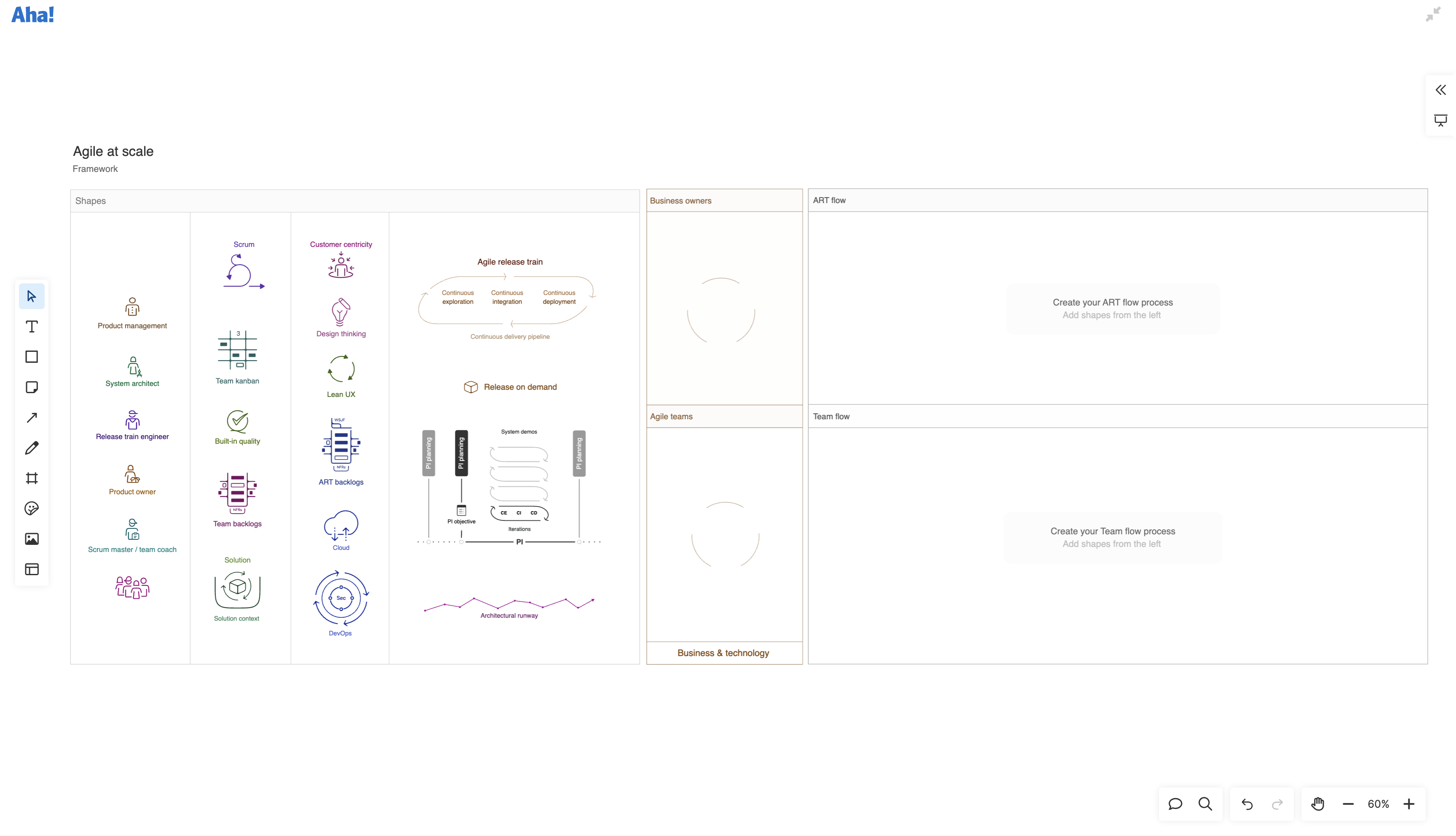
That was a lot to read! So let's wrap up with some visual templates. In addition to the SAFe framework template, we have a few others to share that can help you get organized as a SAFe product manager.
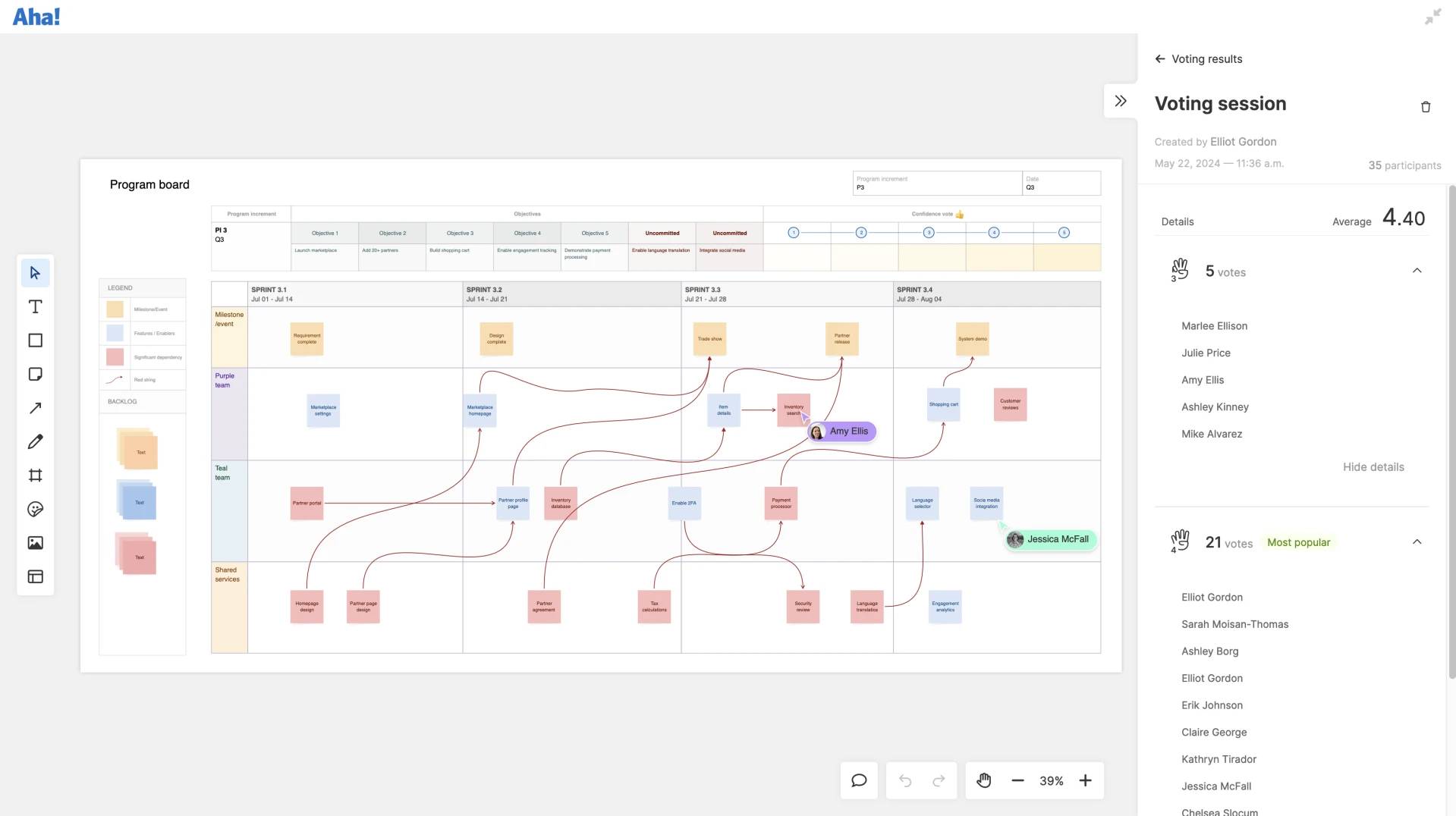
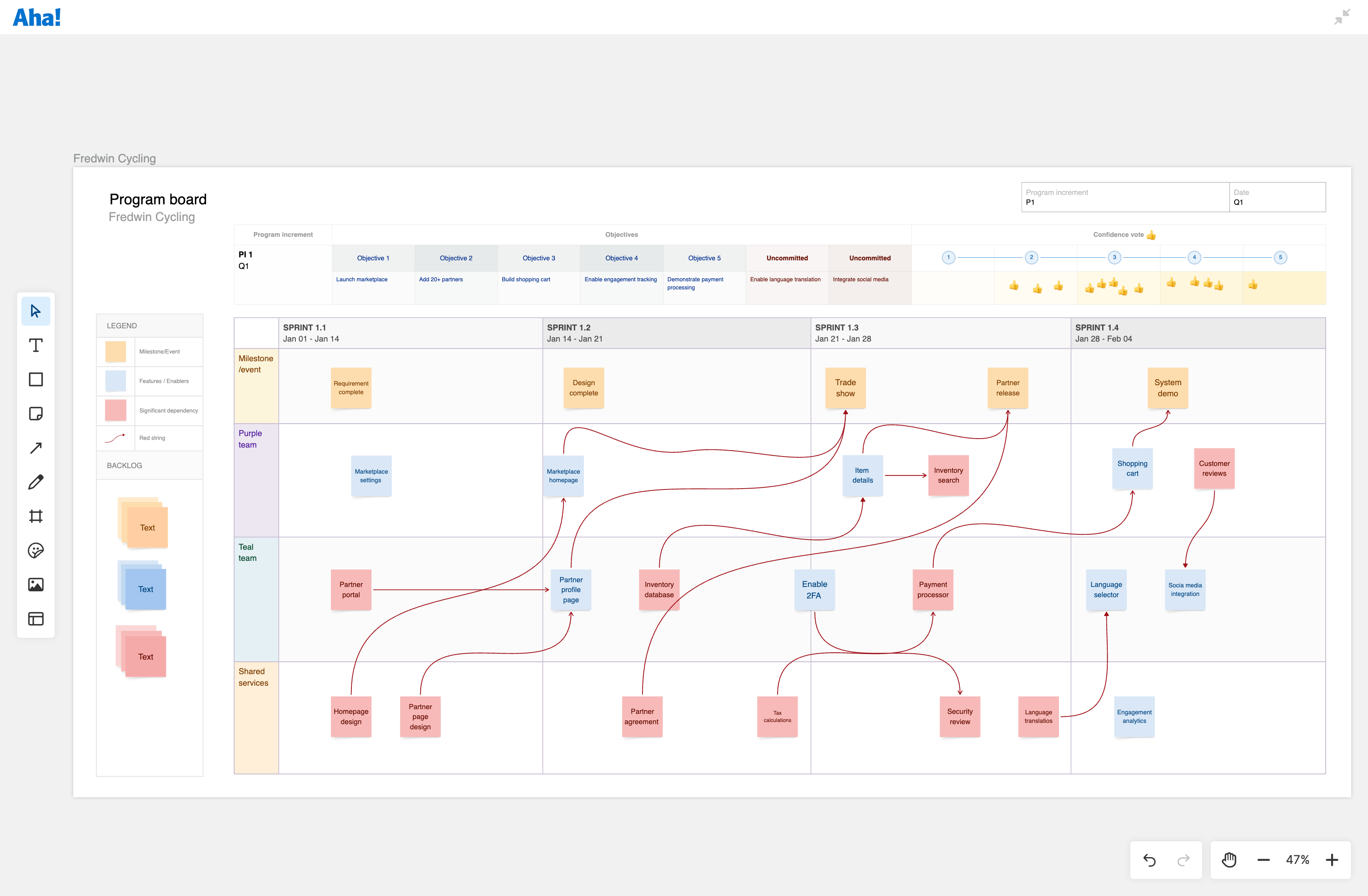
Many teams that follow SAFe rely on digital whiteboards as a collaborative tool throughout the development process, but especially during PI planning events. Whiteboards provide a simple way to bring everyone together in one place, and templates designed for SAFe help save setup time.
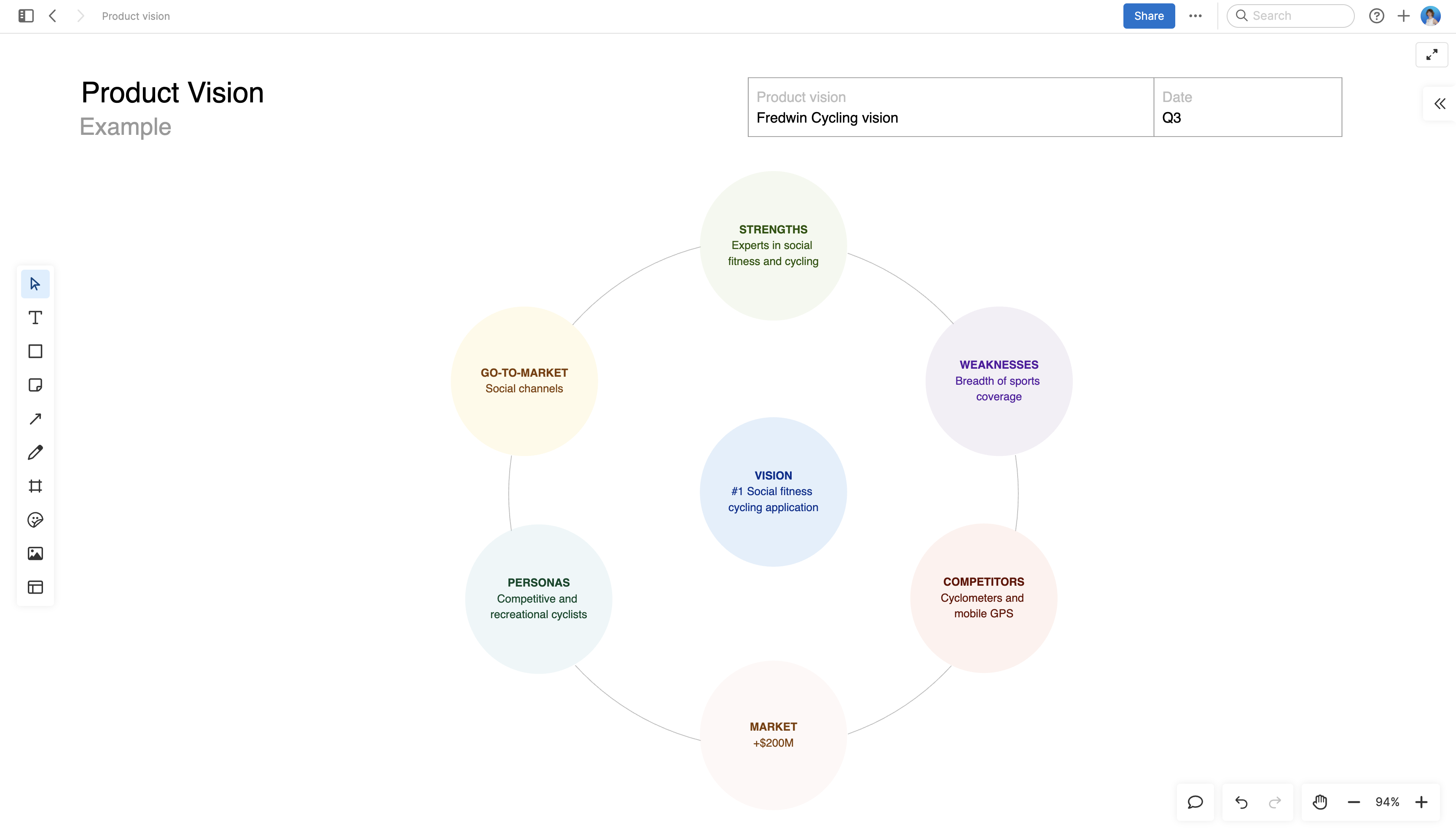
As a product manager, you might find it convenient to include your product vision (and anything else you want to present) right on the same whiteboard where PI planning takes place. Give it a try with these templates:
SAFe® PI planning templates