The goal of customer journey mapping is to identify ways to make the buying process and the Complete Product Experience (CPE) more seamless and engaging. That means examining everything from trial signups to product renewals and all the interactions in between — looking for points of friction or frustration the customer may be experiencing. Where do folks disengage or drop off? How can your marketing, sales, and service teams better understand and provide what customers need at each stage? Building and taking action on a customer journey map requires that you tap into collective knowledge — bringing together representatives from product management, marketing, sales, and support.
In reality, customer journey mapping is only becoming more complex. Customers typically need to become problem-aware before they are even aware of your product. And as they move from awareness to consideration and decision-making, they are influenced by external factors (e.g., review sites, word of mouth, and competitors) as well as interactions with your company (e.g., digital ads, content, product demos, and live chat). Collecting meaningful data on customers' online and offline behavior is challenging — particularly because customer journeys vary by persona and even individual. Oftentimes, customers take a start-stop, cyclical journey that is dictated by their own goals, whims, and budgets.
So, why build a customer journey map if it is all so hard to pin down? The purpose is not perfection. Rather, you are aiming to define as typical a journey as you can, so you can build a more cohesive brand experience. Your map can spark conversations across teams about where to invest time, resources, and effort.
Jump ahead to any section to explore more:
Why is customer journey mapping important?
Customer behavior can be mysterious. Some people may spend meaningful time exploring your product during a free trial — then never sign up. Others might hear about you from a friend and purchase based on that recommendation alone. Try not to let every edge case overwhelm you. The purpose of journey mapping is to capture a high-level view of touchpoints across channels — think generally rather than specifically.
This is not to say that you will not uncover deep insights. Outlining buyer stages, actions, and feelings can illuminate gaps in the buyer experience that hinder progress.
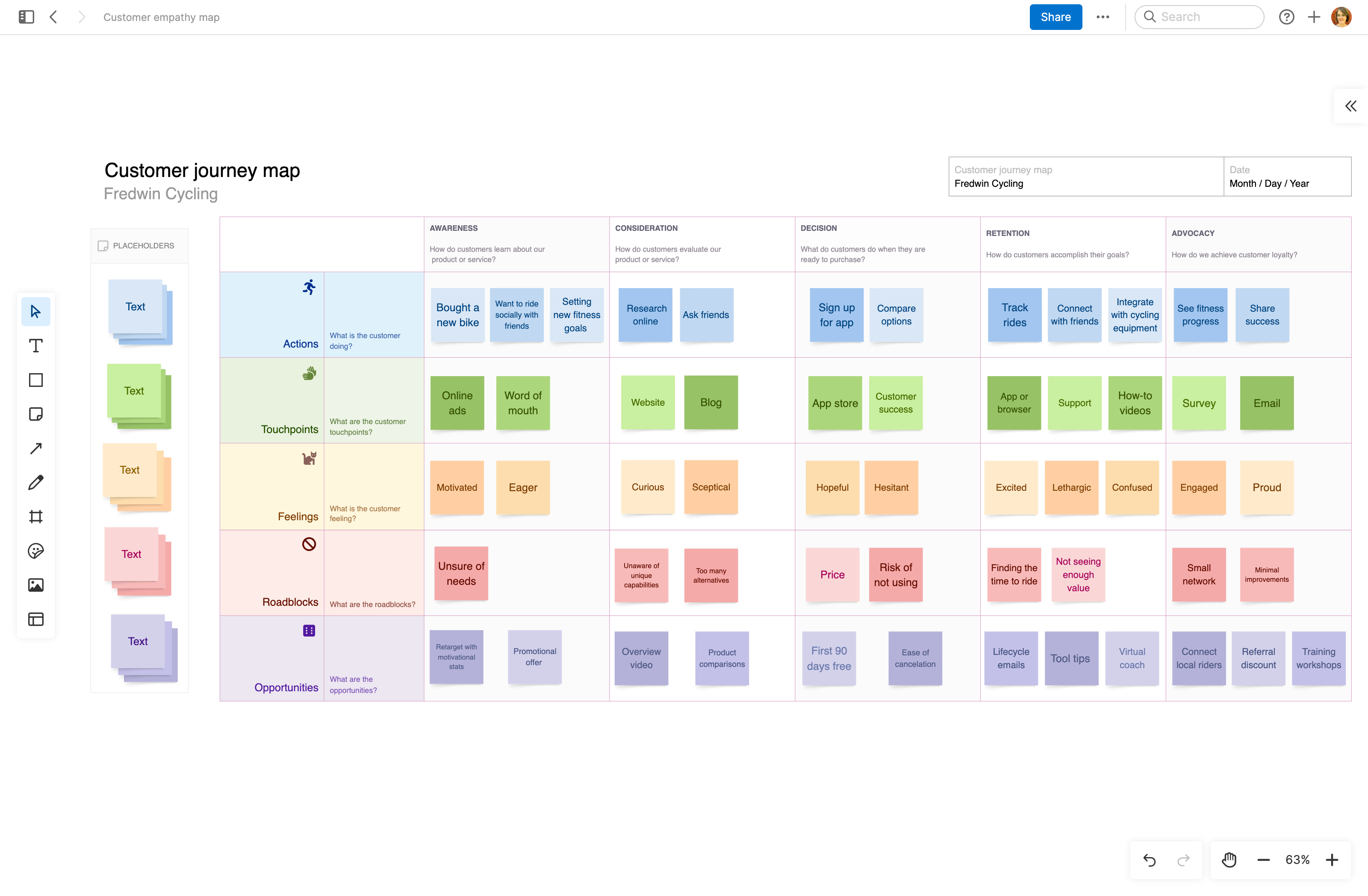
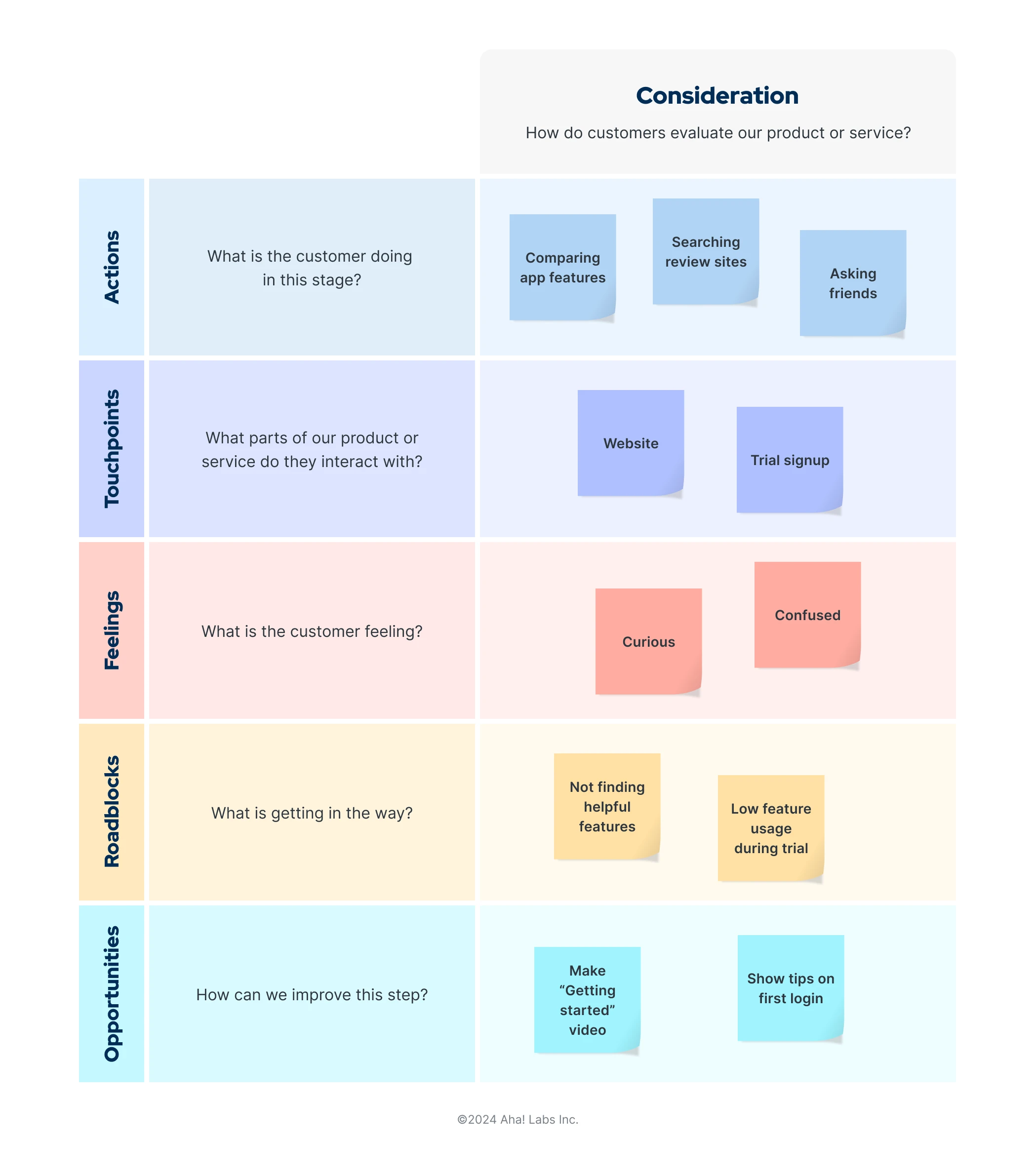
Let's look at an example. In the screenshot below, we are zeroing in on the consideration stage for a fictitious fitness-tracking app for cyclists. We know that prospective customers are curious to find out which features we offer against other apps on the market — they are exploring review sites and trial signups are high. Yet, trial engagement for the features they care about is low.
Of course, there could be various reasons for this. We might hypothesize that customers do not know where to start in our app or are having trouble finding what they need. There may be an opportunity to ease customer confusion with a "Getting started" video at initial login or a guided onboarding experience.