Our product expert panel last week provided sharp takes every PM should hear.
5 insights from product leaders on AI and the future of PM


"Your role will not exist in 2027." "A PM who is better at AI will take your job." You have probably seen headlines and hot takes like these everywhere lately. They are built to provoke anxiety — not offer much practical help. Yes, product management is changing quickly, and AI is a big part of that shift. But alarmism is not the same thing as insight.
Product builders need honesty and clarity — not fearmongering — about the future. That is why we brought together trusted product experts to talk about it.
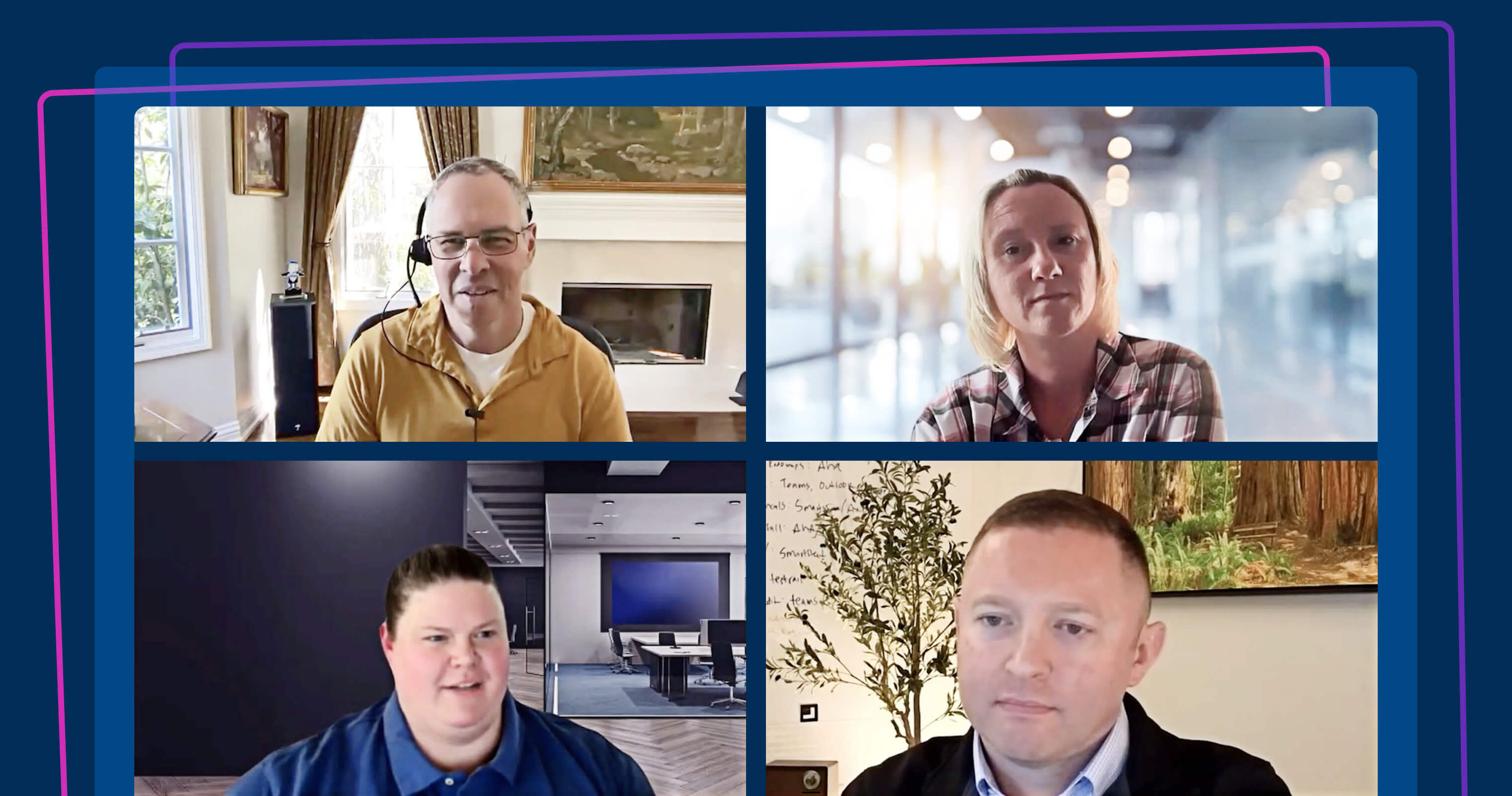
Last week, we hosted a roundtable on the AI-powered future of product management. Aha! co-founder and CEO Brian de Haaff moderated the conversation with Stephanie Redl of Descartes, Nicole Klemm of LexisNexis, and Erik Baerresen of Tri Counties Bank — product leaders navigating these shifts in their own work and across their organizations.
The conversation focused on the questions product managers are asking right now, many submitted by you: How AI is changing the role? How should teams measure if it is working? And how can you can thrive in this next era? Panelists also shared how their teams are experimenting with AI to rethink how work gets done.
Maybe you feel optimistic. Maybe you have doubts. Either way, you want a clearer view of what is ahead. Here is what the experts had to say.
Watch the replay for the full discussion, and see the five ideas that stayed with us from the conversation below.
Be choosy — keep some work to yourself
"You can't delegate ownership. A human should always be the one owning the output, and making the judgment that the job is done." — Erik Baerresen, Vice President, IT and Portfolio Manager at Tri Counties Bank
Panelists pointed to the same early pattern across teams: AI helps people get moving. It is useful for creating first drafts of almost any artifact, scanning research, and spotting patterns in data — quickly giving you something to react to.
While AI can produce polished output and even mimic human understanding, it cannot take accountability for its own results. Panelists were clear: product managers need to protect this part of the role for yourselves. Hold onto the hard decisions and own the outcomes — fight the urge to let AI do this thinking for you.
Engineers should be talking to customers
"Magic happens when you understand the customer and have an idea on how to solve it with technology. And the closer we can get engineers to the customers, the more of this magic we can see." — Stephanie Redl, Vice President of Product Operations at Descartes
Panelists shared excitement that product managers can create prototypes and applications with AI — which can lead to earlier team alignment and faster delivery. In turn, engineers can focus more on broader technical decisions and system maintenance.
But as product managers move closer to building, some panelists posed that engineers should move in the other direction — closer to discovery. If engineers can spin up software quickly with AI, incorporating your existing customer context and product vision, they can start to explore the problem space and test ideas themselves. In their view, that could ease the growing bottleneck around deciding what to build. And they mentioned bringing engineers to listen in on customer calls as a natural way to start.
Output is not the same as outcomes
"If you just try to produce more without going out to deepen [customer] understanding, that's where you get into that danger area — where you're producing output and not outcomes." — Nicole Klemm, Director of Product Management at LexisNexis
AI should not change your goals. And you do not need a special way to measure whether it is working — it should simply help you reach your objectives sooner. But panelists also drew a clear line between activity and value: more chats and automated agents are not proof of progress. If work is speeding up but customer value is not increasing at a similar rate, AI may be making teams busier without making them more effective.
AI adds more work than it alleviates (right now)
"Most of us now have two jobs. We have the job we used to have, and we have the job of trying to figure out how we use AI to do our old job more effectively." — Brian de Haaff, co-founder and CEO of Aha!
Panelists were skeptical that AI is creating extra capacity for product managers at this point. Even if individual tasks happen much faster, teams are spending any time they save — and often much more — learning how to use AI well and scaling new workflows across the organization.
Still, panelists saw an upside to this increased effort. People across product roles — and even customers — are working through many of the same challenges. They noted this shared experience is a unique opportunity to build empathy.
How product managers can grow their careers
"I am hopeful that AI is going to free us up to do the work that is actually worth doing. If the tools handle production work, then we get to spend our time on judgment, people, and solving real problems — the work that made most of us want to do this in the first place." — Erik Baerresen
AI may not be creating extra bandwidth for product managers just yet. But panelists were hopeful that it will. And when it does, the strengths that have always set great product managers apart — deep customer understanding, collaboration, and keen prioritization — will matter even more. Those are the skills that help teams move faster without losing sight of what customers need.
AI tools will continue to evolve. So will the product manager role. But the future still belongs to those who think critically and stay close to customers — prioritizing human dignity in anything you build.
We were glad to see so many of you join us for the conversation. It was the first event of its kind for us. And the response made clear you are interested in having more direct, practical discussions about product management like this one. So stay tuned.
Do not miss the next product expert panel — sign up to be notified of future Aha! events.