Product All-Stars: How product leaders are helping teams build with AI


Earlier this summer, Aha! co-founder and CEO Brian de Haaff sat down with three product leaders for a wide-ranging conversation about AI and the future of product work. They talked candidly about the opportunities and questions AI is creating for product teams, plus how people can flourish in this new age of software-building.
One of the questions that came up was this: How can companies give people room to experiment with AI while providing control and meeting best practices for building?
AI app builders are expanding who can create software inside an organization. That is a tremendous opportunity — and a new challenge for leaders who need to ensure responsible AI use.
Someone who understands a problem can now turn an idea into a working prototype or application without waiting for a traditional development process. More people can test ideas themselves or create software for problems they understand firsthand.
Leaders should want people to explore what is possible. But the same tools that expand who can build also expand what companies need to account for. Which tools are people using? What company data can those tools access? What other systems can an application connect to? And does anyone have a complete view of the applications being created across the organization?
The panelists' answers covered everything from company principles and employee education to technical protections, approved tools, and individual accountability. We also heard a lot that resonated with our experience of creating and launching Aha! Builder.
Let's dive in:
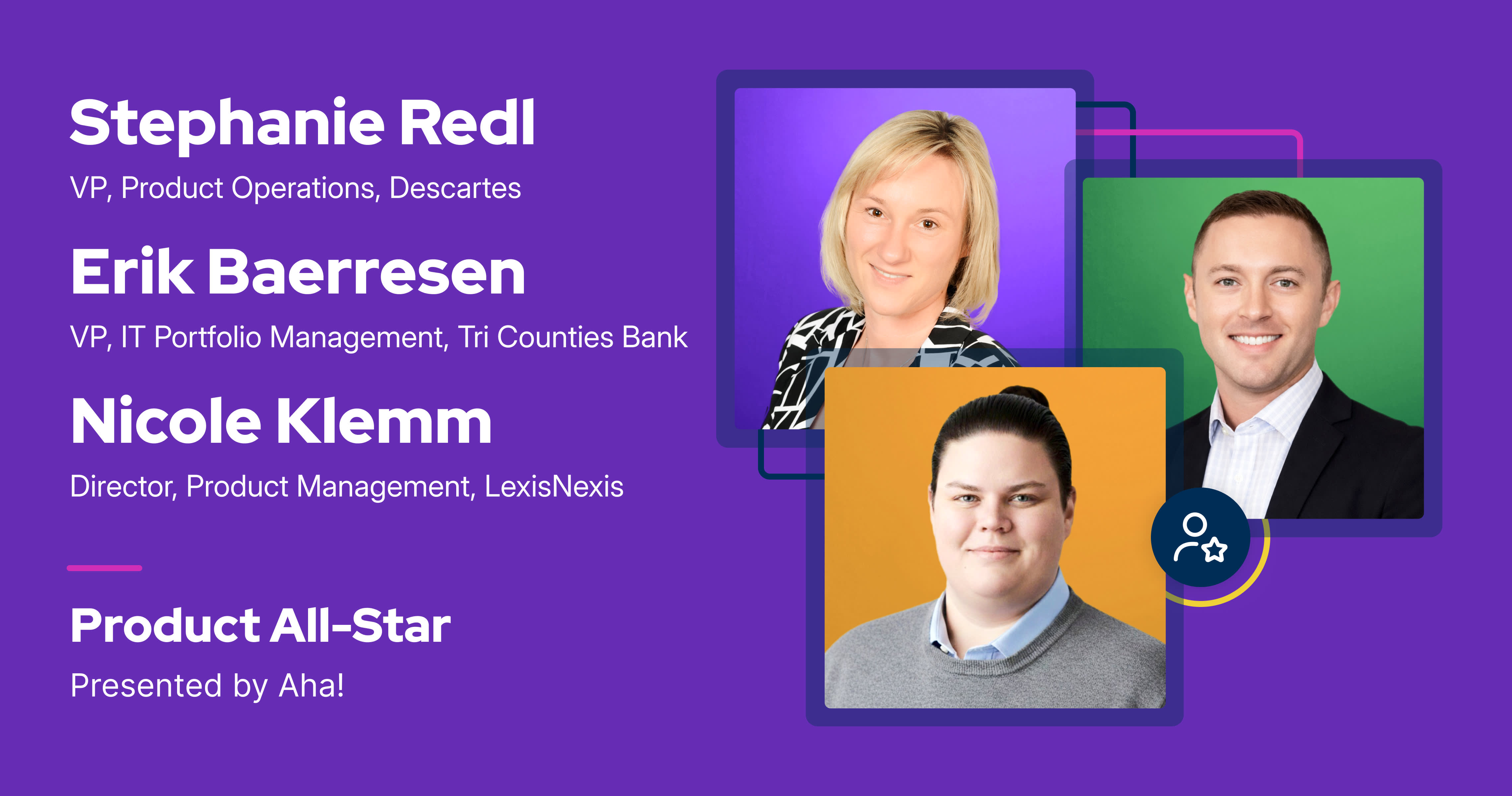
Nicole Klemm: Give people principles they can use
"You have to help people understand the playing field — where the pitfalls are and what the consequences of those might be — and then, ultimately, trust them to make good decisions as stewards of the company."
Nicole Klemm's passion for asking questions that improve the customer experience led her into product management. She is currently the Director of Product Management at data analytics company LexisNexis.
During the panel, Nicole pointed to a series of responsible AI principles published in 2023 by RELX (the parent company of LexisNexis). They address issues such as privacy, discrimination, and the broader impact AI can have on people — offering employees a shared foundation for using the technology responsibly.
The company also put resources behind those principles. Nicole described dedicated teammates who evaluate AI tools and help determine how to roll them out safely. But a central group cannot anticipate every decision someone will make with AI. Nicole emphasized education and training as well; employees should understand the risks and consequences to make informed choices in their own work.
Erik Baerresen: Know where AI is being used
"I think you just have to remember that AI compresses the time to output, but it doesn't compress the time to judgment — especially in regulated environments. Judgment is the new job. You own the output."
Erik Baerresen is the Vice President, IT Portfolio Management at Tri Counties Bank, a community bank in California. His role centers on turning the bank's strategy into delivered value across its technology and process portfolios.
A regulated bank has little room for ambiguity about how sensitive information is handled, and Erik was direct about being selective with what gets handed off. AI might contribute to the work, but people are still making major decisions about which problems to solve and how to handle tasks involving customer data, regulatory risk, or stakeholder trust. As Erik put it: "You own the output."
Tri Counties Bank also uses technical protections. Governance monitoring tools help Erik's team understand how people are using AI and identify unsanctioned LLMs. Likewise, endpoint and browser protections can prevent confidential or proprietary information from being entered into AI tools.
Stephanie Redl: Experiment with tools your organization can manage
"You won't find out what the AI can do for you if you're not playing with it. Try it. There's a saying: The AI you use today is the worst AI you'll ever use. If it doesn't work today, it might work tomorrow or next month."
Stephanie Redl is a Vice President of Product Operations at Descartes, a global provider of software and services for logistics and supply chain management. She supports a global team of product managers.
Stephanie wants her team experimenting with AI, because you cannot know what a new tool might be useful for without trying it. And in her experience, the best ideas come from the people closest to the work.
With employees around the world, though, Descartes cannot know about every AI tool someone might try. Stephanie's team is still figuring out how to encourage experimentation within tools that security and IT can approve and monitor. Aha! Builder came up as one option. Teams can use the AI app builder to experiment and create applications within a platform that includes governance controls. This means Descartes can manage how teammates use the tool instead of trying to account for an array of unapproved AI platforms.
Give people room to build — with the right safeguards
Our conversations with product leaders — along with our own experience of creating Aha! Builder — have given us a close look at how companies are approaching AI safeguards. A few practices stand out:
Give people an approved place to build: If employees are going to experiment, give them a tool that security and IT have already vetted. This reduces the need for individuals to seek out AI app builders on their own and gives the organization a known environment to manage.
Control access to company systems and data: Think beyond whether the application itself is secure. App security should also cover what information an application can view and the systems it connects to. Access controls determine who can use it.
Maintain a view of what is being built across the organization: More builders can quickly mean more applications. Administrators need a way to see them across the organization and know who is responsible for each one. Portfolio management in Aha! Builder provides that view.
Require review before broader use: Set expectations for who is responsible for reviewing each application and approving its use.
More people inside companies are going to build software. We see that as an opportunity worth embracing. Companies can give people meaningful room to experiment without leaving folks guessing about what is being built or where company data is going.
Read more of the Product All-Star series.
Know an inspiring product builder? Nominate them to be featured in an upcoming post. They simply need to be doing quality work and using Aha! software.